
日本企業の技術で世界の食料・水問題を解決
南アフリカのブドウ農家にて節水型農業の実証試験を開始
2019.08.23
(PDFはこちら)
株式会社鳥取再資源化研究所(本社:鳥取県東伯郡北栄町東園583、以下「当社」)は、南アフリカ・西ケープ州のブドウ圃場(生産者:UITVLUGT)において、当社が製造する多孔質発泡ガラス「ポーラスα」を用いた節水型農業の実証試験を開始しました。
本実証試験は、農林水産省補助の「アフリカ等のフードバリューチェーン課題解決型市場開拓事業」により実施されます。また当社技術を現地の環境にあわせるため、南アフリカ農業研究協議会(Agricultural Research Council、以下「ARC」)から、実証試験の設計や潅水量の調整方法など技術面の支援を受けます。
廃ガラスをリサイクルして製造されるポーラスαを土壌に混合することにより、土壌の保水性と通気性が向上し、節水と収穫量の拡大を同時に実現します。鳥取大学と共同で開発した本技術は、日本をはじめ、モロッコやソマリア、セネガルといったアフリカ諸国や、UAE、中国など多くの国で、果樹や野菜の節水栽培の成果を上げています。
【モロッコでのトマトの試験栽培結果】
 |
灌水量約48%を節約し、収量が20%以上増加。 栽培圃場:スス・マッサ農業開発公団実証試験圃場 栽培期間:2015年9月~2016年4月 潅水方法:点滴灌漑 |
南アフリカは、アフリカ第2位の経済規模を誇り、ブドウやオレンジ、アボカドなどの果樹栽培が盛んです。一方で、水資源が恒常的に不足気味であることに加え、気候変動の影響による降水量の減少と干ばつの頻発により、農業用水の取水制限も一部地域では実施されています。日本と南アフリカの産学官連携となる本実証試験を通じて、現地に適した節水栽培技術の普及を目指します。
ポーラスαの導入作業は2019年8月16日に行われ、ARCのDr. Myburgは「干ばつは南アフリカの農業産業が直面する深刻な課題で、本技術により節水が可能となれば多くの農家に役立つだろう」とコメントしています。また、今回の実証試験を実施するブドウ農家(UITVLUGT)の代表のMr. Krielは「かん水量が節約できれば作付け面積の拡大が可能となり、全体の収量増が実現する。また、継続的にかん水量を節約できれば、干ばつが深刻化する時期のために貯水池の水を多く貯められ、有限な水を有効活用できる」と本技術に期待を寄せています。
南アフリカのみならず世界中において水資源の枯渇は深刻化しており、水の有効利用の必要性が高まっています。世界資源研究所(World Resources Institute)の2018年の調査[1]によると、人口増加に伴い2050年には、2010年比の156%の食糧が必要になると予測されています。肥料や種子の改良による食糧生産量の増加は期待できるものの、すでに総資源量のうち70%が農業向けに利用されている水資源は今後不足すると言われ、貴重な水資源の有効活用は今後世界全体で取り組む問題となっています。当社は今後も両国の産学官連携のもと、ポーラスαを活用し、食料・水問題をはじめとする地球環境課題の解決や、持続可能な開発目標(SDGs)の達成に貢献していきます。
ポーラスα写真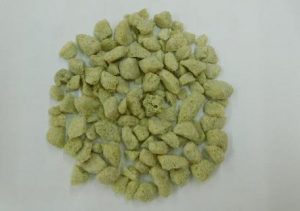 |
導入風景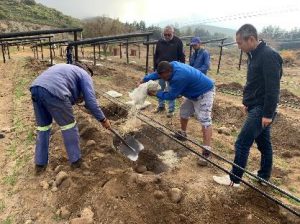 |
【問い合せ先】 株式会社鳥取再資源化研究所 TEL:0858-49-6230 FAX:0858-49-6288 メール:info@t-rrl.jp (担当:国際事業部 澤田)
出典:[1] https://www.wri.org/blog/2018/12/how-sustainably-feed-10-billion-people-2050-21-charts
NEWS
Tottori Resource Recycling, Inc announces the start of the pilot project for a table grape farm in the Republic of South Africa
2019.08.23
(PDF version is available here.)
(Tottori, Japan, 23rd August 2019) Tottori Resource Recycling, Inc (“TRR”) has introduced its soil conditioner, Porous Alpha, as a pilot project for a table grape farm, UITVLUGT in Western Cape. With Porous Alpha, it is expected to increase the water utilisation efficiency, which will result in the higher harvest with the same input and/or the same harvest with less input such as water and fertiliser.
South Africa has suffered from recurrent drought and low precipitation. Though the government has realised various irrigation projects and table grape growers introduced various technologies, the availability of water resources is still one of the significant bottlenecks for the table grape industry in South Africa.
Porous Alpha, a multi-functional foamed glass manufactured by recycling technology on used glass bottles, has shown various track records to increase the water utilisation efficiency for vegetables and fruit trees in various countries such as Japan, China, UAE, Morocco, among others. (You can see some of the projects here.)
This pilot project is hosted by the farm owner with the financial and technical support by the Japanese Ministry of Agriculture, Forestry and Fishery (“MAFF”), and Agricultural Research Council (“ARC”). TRR provides the soil conditioner, Porous Alpha, and technical support on it. and ARC provides technical support, especially on the experimental design and the methodology to control the irrigation amount. Dr. Myburg, ARC comments that “Agriculture industry of Sough Africa faces the serious issue of drought. if Porous Alpha can reduce irrigation water, this technology would contribute many farmers”. Mr. Kriel, the table grape farm “UITVLUGT” shows expectation and saids “if it is possible to save irrigation water, the planted area can be expanded, and the harvested quantity will increase. Also, by saving irrigation water continuously, more water can be stored in water reservoirs in preparation for the serious drought season. We can use limited water resources more effectively.”
| Porous Alpha |
Installation of Porous Alpha |
Not only in South Africa but also all over the world, the significant water utilisation efficiency is required to feed the people in the future. According to the research by the World Resources Institute in 2018, it is necessary to increase global food production by 56% by 2050. Though technical development such as better seed and/or fertiliser might be available, the additionally available water resource is quite limited because 70% of water resource is already used for agriculture Besides, the climate change can reduce precipitation in dry/arid area, which will lead to the severe water resource shortage.
Supported by private and public organizations, TRR continues to explore the opportunity to contribute to improving the global by applying our multi-functional foamed glass material, Porous Alpha.
Contact:
Tel:+81-(0)858-49-6230 Fax:+81-(0)858-49-6288
Email: info@t-rrl.jp (Maki SAWADA)
You can contact us from here.